Husson Students Took an Unforgettable Trip to Japan for Global Lessons
Published on: June 5, 2026
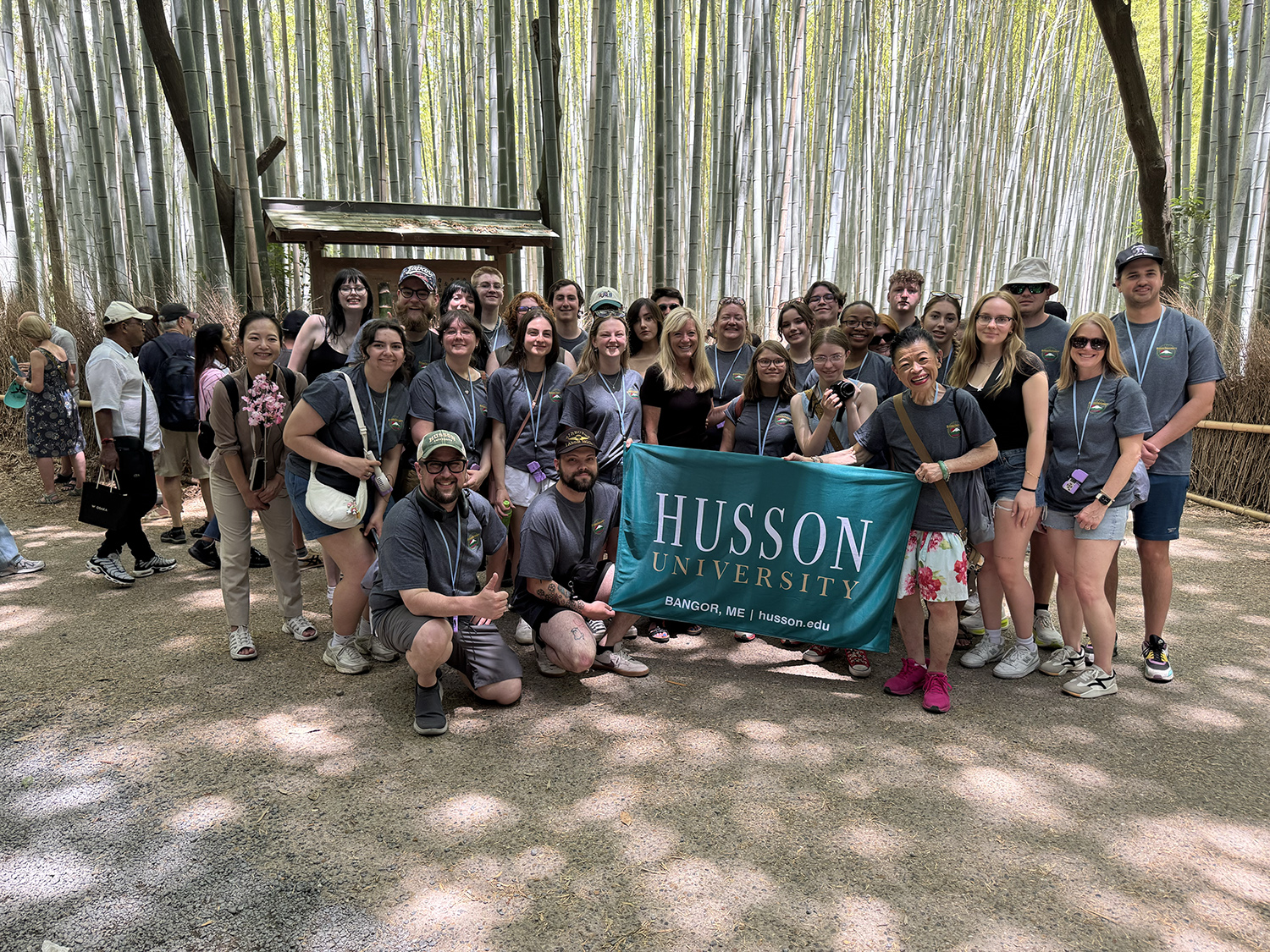
A group of 30 Husson students traveled to Japan for a 14-day trip as part of a course focused on cultural immersion. Students explored the country through both business and language perspectives, providing them with valuable global perspectives that they will be able to apply in their future careers
Dr. Elizabeth Bland, a business professor with over 20 years of management experience and a personal travel history spanning more than 20 countries, led the program with help from Dr. Michael Camire, Dr. Stephanie Shayne and Dr. Belinda Wee.
Students flew from Boston to Tokyo, where they visited Shibuya, the fashion district Harajuku, and the anime district Akihabara. From Tokyo the group traveled to Kyoto to see the Fushimi Inari shrine, where there are over 10,000 Torri gates, as well as the bamboo forest and the city's castle. Then they went to Osaka, where the main draw is the canal district packed with food vendors and vibrant street life.
The final stop was Nagoya where the group toured an automotive manufacturing facility to study the Japanese production philosophy of kaizen. A tour company will handle transportation throughout, including bullet train tickets to Mount Fuji.
"I didn't want to take students to someplace like Maine," Bland said. "Experience something different. So you get uncomfortable, because that's when you grow."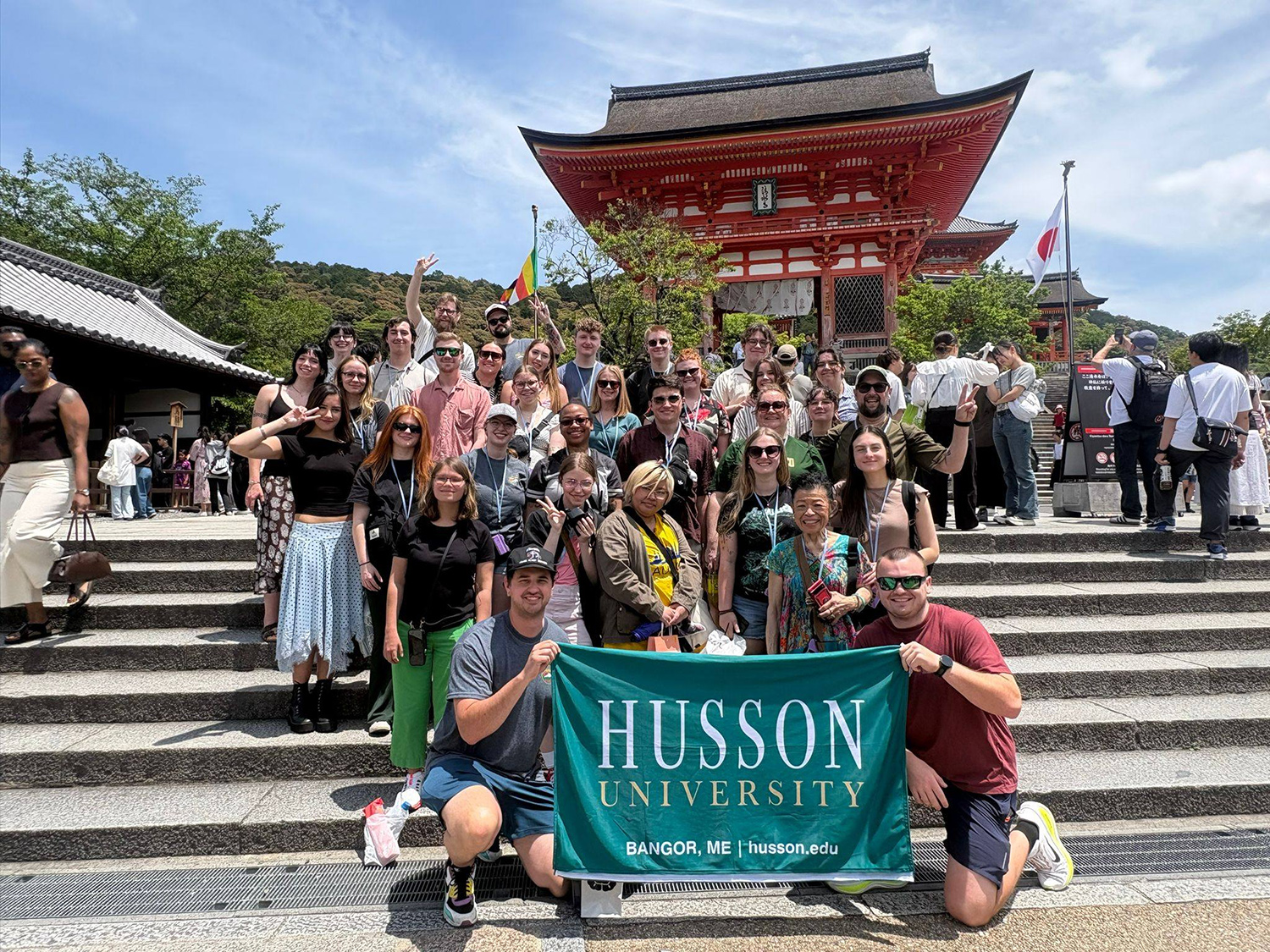
While the experience is meant to be fun and educational, Bland was clear about the importance of maintaining a tight schedule during the trip. It wasn’t an arbitrary rule either. In Japan, being late is considered a burden on everyone in the group, and Bland wants students to understand the culture they're immersing themselves in.
Students on the trip enrolled in a course that required them to meet weekly to learn basic Japanese and work on individual research papers. The paper was written in two parts, before the trip and after, on a Japanese topic tied to the student's own major, or something about Japan that interests them.
Nicole Donahue, a junior financial planning major, wrote her paper on the Japanese shrines but also has her eye on the group's behind-the-scenes visit to the Tokyo Stock Exchange.
"We always hear about Wall Street," Donahue said. "Never any foreign stock markets. So it'd be interesting to see how they do their stocks, compared to coming back in the fall and taking Husson's Investments course."
Samantha Raymond, a junior graphic design major at NESCOM, researched Gashapon culture, the capsule toy vending machines that fill convenience store entrances and entire buildings across Japan.
She's approaching the trip as a designer, paying attention to packaging laws that require product images to appear at actual size, street signage, and how color carries different meanings across cultures.
"When you're creating graphics, you have to think about different cultural experiences," Raymond said. "The color red might mean something in a different culture than it does here in America."
Separate from her research paper, Raymond aimed to try as much food as she could, including seafood, which she wouldn't normally eat at home. She believes learning about and experiencing new cultures is something everyone should get a chance to do.
"The world's such a big place," Raymond said. "Being able to learn about something different from a different culture helps to broaden your horizon when talking to different people, and especially in the workplace."
Bland hopes to bring another group of students to a different country next year. Her goal is less about the specific sights and more about what happens when students are dropped somewhere so unfamiliar. The discomfort, she argues, is the whole point.
"I can tell you that it's different somewhere," Bland said. "But if you don't experience it, you don't really know."
- Calvin White