
Inside Husson’s New State-of-the-Art Exercise Science Lab
Published on: April 14, 2026
Understanding the impact of physical motion and environmental stress on the human body are key components of several health programs at Husson University. Now, thanks to the new exercise science laboratory stocked with state-of-the-art equipment, students can monitor and collect detailed data on a variety of physical activities under a range of controlled conditions.
Pretty impressive for what at the start of last summer was an empty classroom.
“The goal was to make it a well-rounded lab that we can use for multiple classes,” said Jonathan Houck, assistant professor in the college of science and humanities. “There’s a lot of equipment here that physical therapy [students] can use [and] there’s also a lot of things the biology students might be interested in and our nursing students.”
Housed in the Beardsley Meeting House, the new lab will allow students across health programs to get detailed information in real time at how individuals doing specific physical activities like running, walking bicycling or lifting weights, respond in terms of overall fitness, performance and physiology. With the specialized equipment, students can also measure heart rate, oxygen use, muscle strength, endurance and balance.
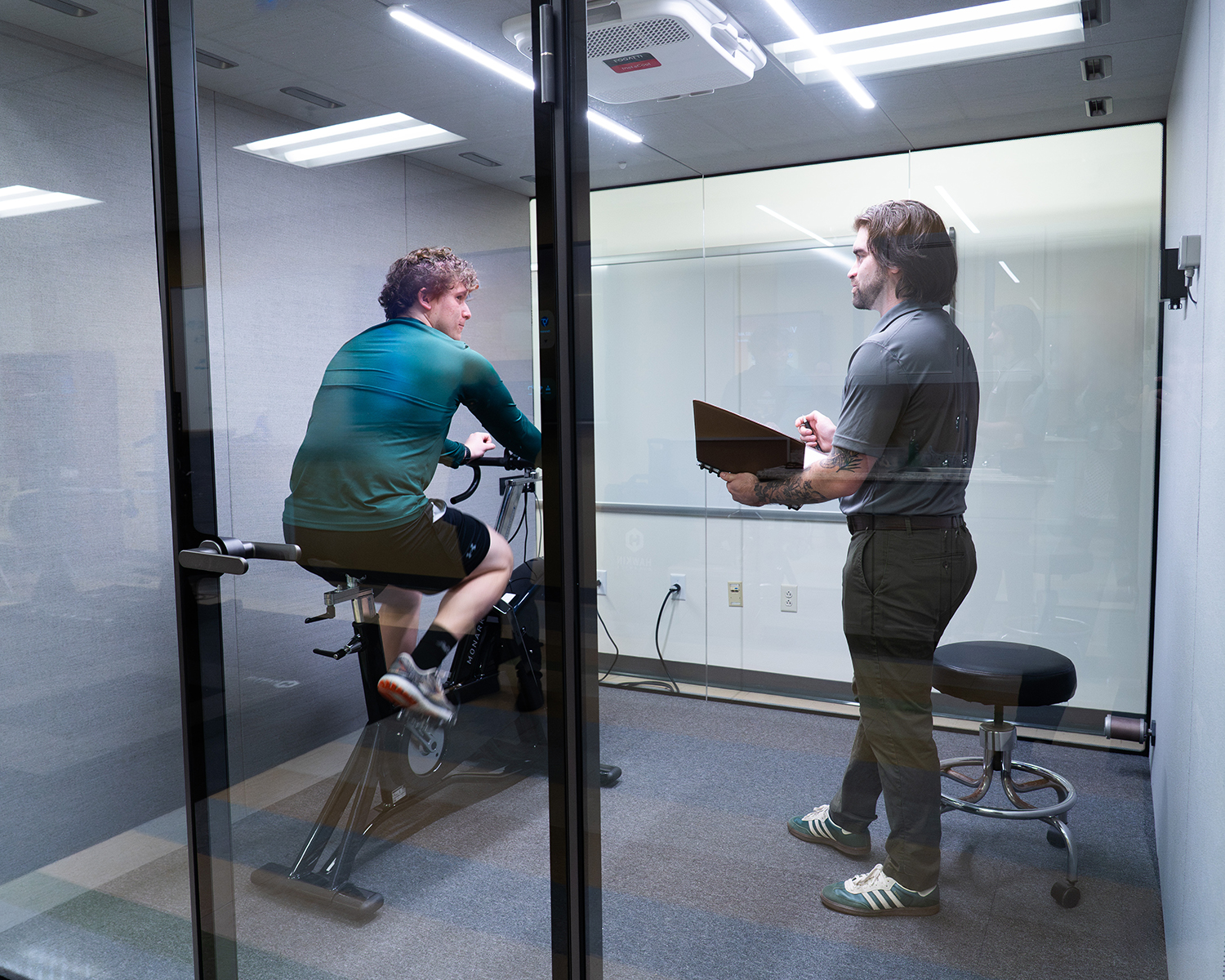
The crown jewel of the lab is the hypoxic chamber. According to Houck, the chamber is central to the study of exercise physiology, environmental stress and physical stress on the human body.
The sealed hypoxic chamber does this by creating low-oxygen environments simulating high-altitude conditions. Houck can control the temperature inside the chamber up to 90-degrees fahrenheit.
“Altitude, heat and cold are big areas for clinical applications and for safety applications,” Houck said. “This is really big in the area of exercise physiology.”
The chamber is currently being used in a campus physical therapy research study looking at the effects of hypoxic stress on individuals with MS and other neural conditions.
“When you breathe hypoxic air, it stimulates your body to release more neurotransmitters,” Houck said, “If you have more neurotransmitters in your body there is more chance of success when they send a signal.”
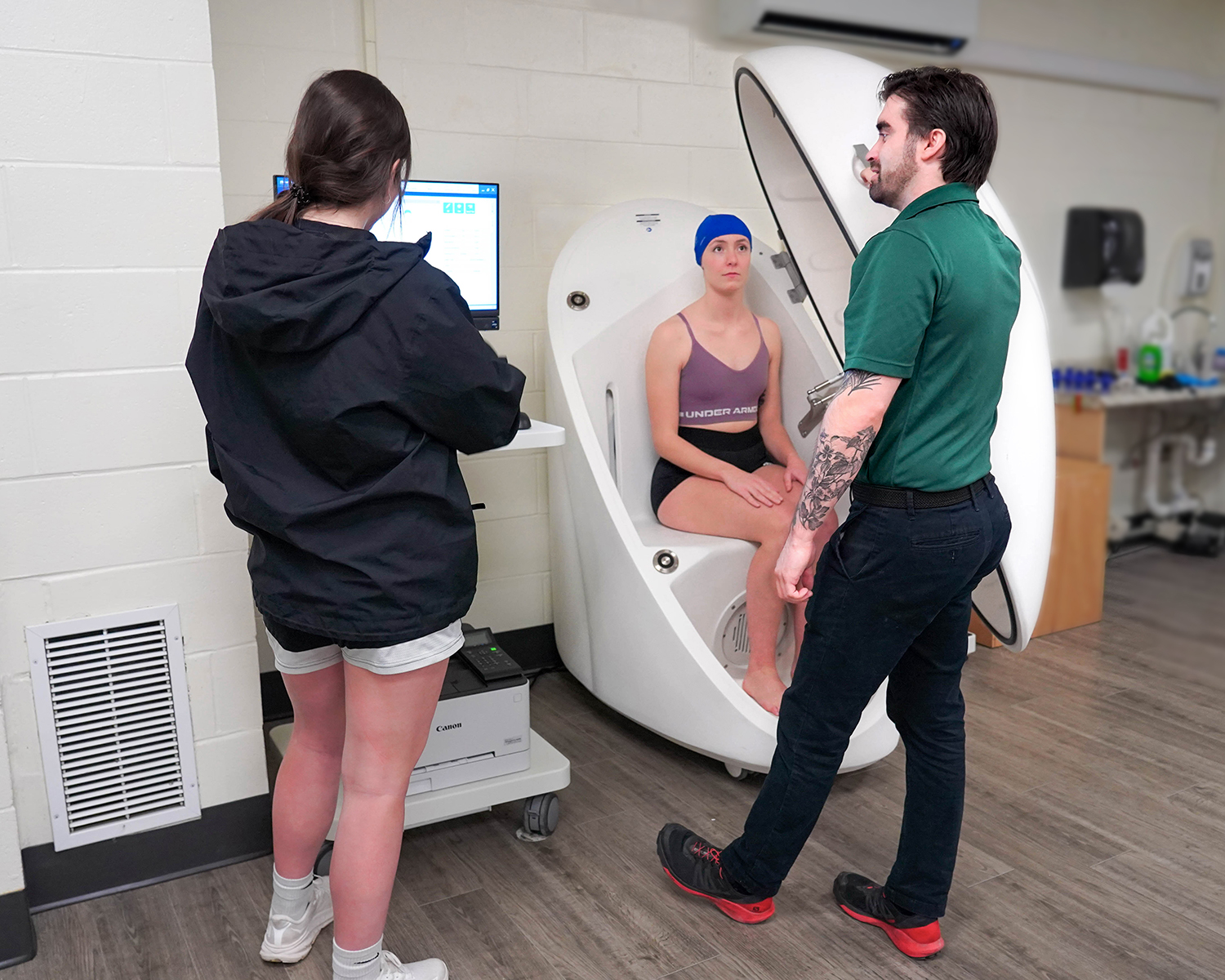
In the opposite corner of the lab are two highly computerized stationary bicycles and a treadmill with which students can monitor everything from oxygen levels to how much CO2 is being used – all with pinpoint accuracy. Nearby are equally computerized machines that test those same levels using upper-body exercises.
Data collected isn’t just useful for individual athletes to improve performance. It also has applications in adapting safety protocols in the workplace.
“We can look at how long athletes should perform above certain temperatures or how long workers should go before a break,” Houck said. “In both cases we are mitigating stress to the human body.”
The best part, according to Hauck, is that everything in the current lab are things graduates of Husson’s health programs are going to see out in the real world.
“I’ve already had students come back to us with feedback that they have seen this same equipment when going for a job interview,” he said. “I feel this is really going to give our students a leg up.”
Looking ahead there are plans to work with Husson athletic teams, high school teams, participate in health fairs and community health monitoring and even work with local fire departments.
“I think we are going to be pretty popular,” Houck said.