
What Is Wildlife Field Research? Skills Wildlife Biology Students Learn Outside the Classroom
Published on: June 30, 2026
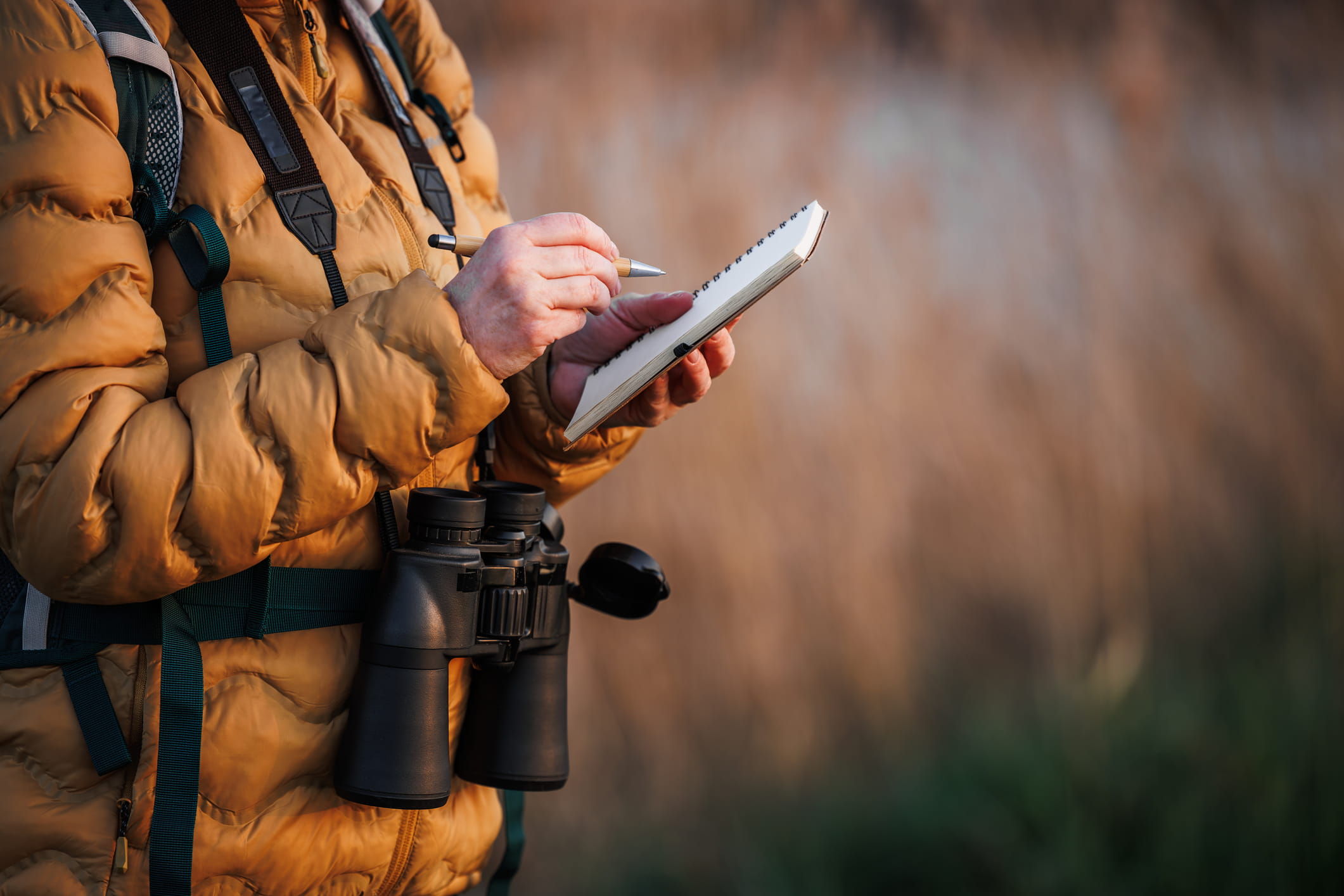
To truly understand wildlife biology, students often step outside lecture halls and into forests, wetlands, shorelines and other habitats where animals live. This is where questions often become more specific: Which species are here? How are they moving? What does this habitat tell us about their survival?
For prospective students, wildlife field research offers a practical look at how science works outside the classroom. It connects biology, ecology, mapping, data collection and written reporting in a setting that changes by season, weather and species behavior.
Earn Your Wildlife Biology and Conservation Degree
What Is Wildlife Field Research?
Wildlife field research is the process of studying animals, habitats and ecosystems in the places where they naturally occur. Instead of relying only on lab observations or controlled experiments, researchers collect real-world data in natural habitats. That may mean counting birds at dawn, checking a camera trap in the woods, mapping plant communities or recording signs of animal movement along a trail.
Lab work still matters because real-world samples often require careful testing and analysis. Field conditions are rarely perfect, so students also learn how to identify patterns despite challenges such as wind, rain, mud, thick vegetation and unfamiliar terrain.
What Does a Field Biologist Actually Do?
What is a field biologist? In simple terms, a field biologist is a scientist who studies living organisms in natural settings and records what those observations reveal about health, behavior, habitat use and population change.
Observe and Identify Wildlife
A field biologist often begins with observation. Students practice identifying species by signs such as:
- Sight
- Sound
- Tracks
- Scat
- Nests
- Feathers
Accuracy is key; one wrong identification can affect every later step, including population estimates, habitat recommendations and conservation reports.
Collect Biological Samples
Field teams may collect biological samples such as tissue, scat, water, soil or vegetation. Students learn how to label these samples and store them properly to prevent contamination. By following proper procedures, students understand how to protect the chain of custody and ensure lab results can be connected back to the field site.
Track Animal Movement and Population Trends
Wildlife research often looks at movement across time. Researchers may track individual animals through tags, collars or observation points. They may also monitor broader trends such as breeding success, migration timing, survival rates or changes in population size.
Record, Analyze and Report Findings
Fieldwork is only useful when the data can be trusted. Students keep field notebooks, complete data sheets, enter results into databases and review findings for errors. Those records can feed into technical reports and management plans, as well as conservation decisions made by agencies or nonprofit partners.
Field Techniques Wildlife Biology Students Learn in College
The strongest wildlife biology programs give students repeated chances to practice field methods before they graduate. These techniques help students move from knowing facts about wildlife to asking research questions and collecting evidence in a disciplined way.
Wildlife Tracking and Radio Telemetry
Radio telemetry uses transmitters, collars and receivers to locate animals across a study area. Students may learn how to take bearings, triangulate locations and compare movement patterns over time. The data can show how animals use habitats and shift behavior by season.
Camera Trapping and Remote Monitoring
Camera traps record animal activity without requiring a person to be present. Students learn where to place cameras, how to reduce disturbance and how to review images for species presence, timing and behavior. The U.S. Fish and Wildlife Service offers training resources related to wildlife biology field techniques.
GPS and GIS Mapping
GPS tools help students record locations in the field. GIS software then turns those points into maps that can show habitat boundaries, travel routes, survey sites or population patterns. Mapping helps wildlife research teams see relationships that may not be obvious from written notes alone.
Habitat and Vegetation Surveys
Animals are tied closely to the plant communities and physical features around them. Students may use transects, plots and plant identification skills to describe habitat quality. That information can also explain why a species is thriving in one area but struggling in another.
Capture, Marking and Tagging Methods
Some studies require live-trapping, banding, ear-tagging or other marking methods to monitor individual animals safely over time. Students learn that proper training, permits and ethics are not optional. The goal is to gather useful data while minimizing stress or harm to wildlife.
How Classroom Skills Carry Into the Field
Classroom learning gives students a strong scientific foundation, while field learning shows them how theoretical ideas work when they are standing in a wetland with a data sheet, a GPS unit and a time-sensitive survey plan. Classroom skills translate to the field in the following ways:
- Statistics and data analysis become field data sheets and population estimates.
- Anatomy and physiology become hands-on species identification and health assessment.
- Ecology becomes habitat surveys and ecosystem fieldwork.
- Scientific writing becomes field notebooks and research reports.
- Lab technique becomes proper sample collection and chain of custody.
The outside world is also where students begin to understand what a field biologist really does in practice. The role blends science with patience, precision and the flexibility to adjust when a site, species or weather pattern does not cooperate. That same mix is valuable for anyone preparing for wildlife research work.
Where Wildlife Field Research Happens in Maine
Maine gives wildlife biology students access to a wide range of field settings, from forests and lakes to rivers and wetlands. The state also places strong emphasis on conservation. According to the Maine Department of Inland Fisheries and Wildlife, conservation efforts support nongame species, threatened species and habitat areas.
This regional variety matters for students in an on-campus program. A wildlife field experience in Maine can involve:
- Freshwater systems
- Forest mammals
- Coastal birds
- Amphibians and reptiles
- Pollinators
Students interested in this kind of hands-on learning can explore Husson University’s on-campus Wildlife Biology and Conservation program.
Soft Skills the Field Builds That a Lab Can't
Fieldwork builds skills that are hard to develop at a desk. Students learn how to stay calm when equipment fails or a survey window changes because of weather. They also learn how to communicate clearly with a team when everyone is tired, wet or working in a remote area.
Ultimately, wildlife research is rarely neat. A future wildlife researcher needs technical knowledge as well as sound judgment. Fieldwork helps students practice problem-solving with limited tools, paying particular attention to safety and respecting the animals and habitats they study.
How Field Research Prepares You for a Wildlife Research Career
College fieldwork can help students build a foundation for entry-level wildlife researcher, field technician, conservation assistant or seasonal biological science roles. Common employers may include conservation nonprofits, state agencies and federal agencies.
Students interested in wildlife-focused careers may also explore paths related to zoology and wildlife biology. According to the Bureau of Labor Statistics, zoologists and wildlife biologists study animals and how they interact with ecosystems. These experiences can help students better understand the realities of field-based wildlife work.
Regardless of which exact path you choose, field experience shows that you can follow protocols, collect reliable data and work safely in outdoor conditions. It also gives you examples to discuss when applying for seasonal positions or graduate study.
Build Field Skills Through Husson University's Wildlife Biology and Conservation Program
Wildlife field research teaches students how to collect reliable data, analyze patterns and communicate findings that can support conservation decisions. It also helps students see how classroom subjects like ecology, statistics, anatomy and scientific writing carry into real work outdoors.
If you are interested in wildlife research and want an on-campus program rooted in hands-on science, Husson University’s Wildlife Biology and Conservation program can help you build that foundation. The program gives students a path to study wildlife, conservation and field-based science in a state with rich habitats and meaningful opportunities to learn outside the classroom. Explore Husson University’s on-campus Wildlife Biology and Conservation program to learn how a field-focused education can support your next step.
Earn Your Wildlife Biology and Conservation Degree
Back to All Articles