

Careers in Extended Reality: From Entertainment to Healthcare
Published on: April 24, 2026
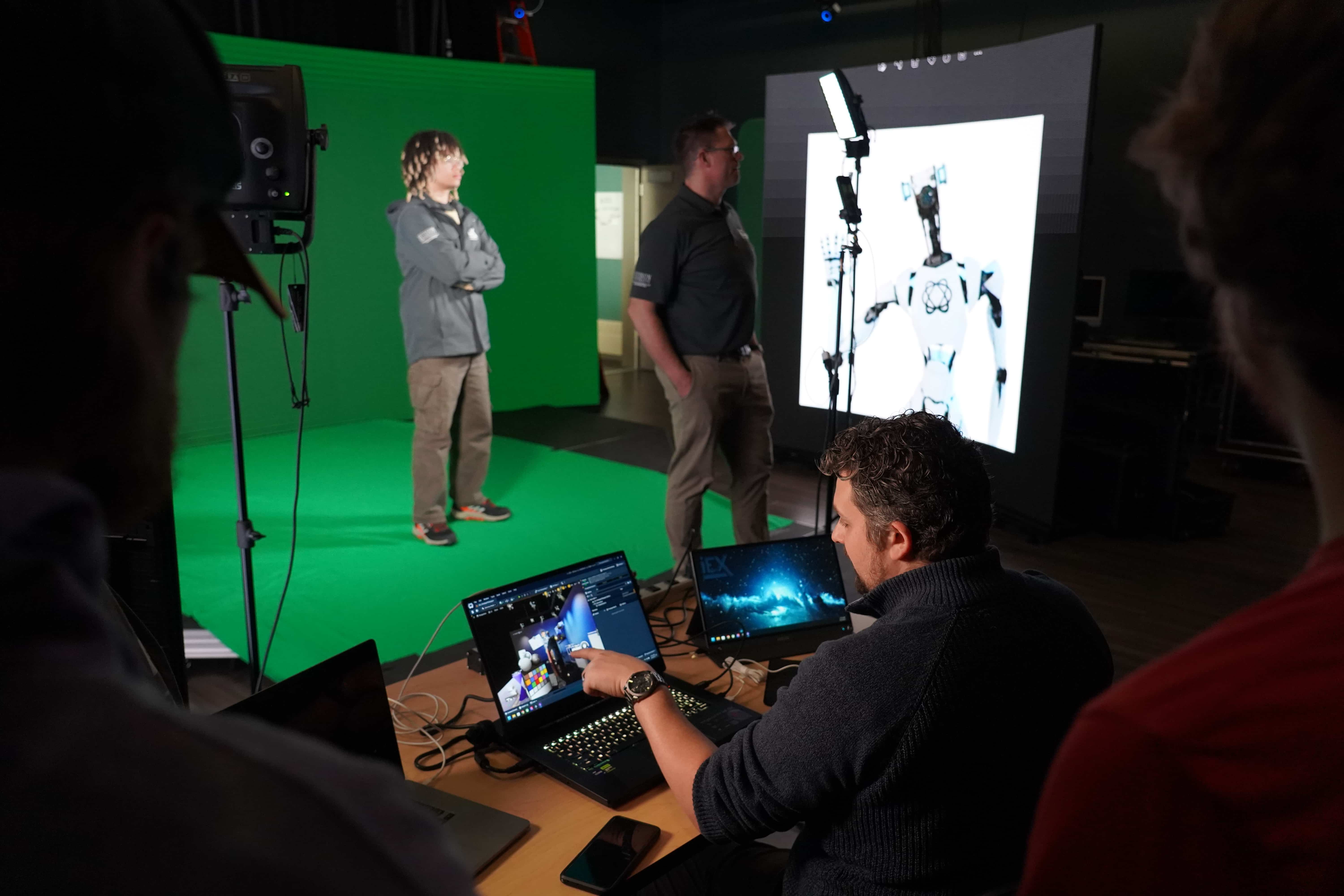
Extended reality is currently one of the fastest-growing fields in technology, and it shows no signs of slowing down. Whether you have a background in design, healthcare, education or software development, XR offers a path forward. This guide breaks down what augmented reality (AR) and virtual reality (VR) are, where they're being used and what kinds of careers are opening up across industries — so you can figure out where you fit in.
Explore Our Extended Reality Program
What Is Extended Reality (XR)?
Extended reality, or XR, is an umbrella term that covers a range of immersive technologies — including augmented reality, virtual reality and mixed reality. Each of these technologies creates a different type of digital experience, but they all blur the line between the physical and digital worlds. Understanding these differences is a good starting point for anyone exploring this field.
Augmented Reality vs Virtual Reality
Augmented reality and virtual reality are the two most widely known XR technologies. While they're often mentioned together, they work quite differently. Augmented reality overlays digital content onto the real world — think of the filters you use on Instagram or the Pokémon you chase down the street with your phone. The physical environment stays visible, and the digital elements are layered on top of it.
Virtual reality, on the other hand, places you inside a fully immersive digital environment. You put on a headset and the real world disappears. VR is what powers those high-end gaming experiences and flight simulators that feel startlingly close to the real thing. Both technologies have moved well beyond novelty; they're now being used to solve genuine problems across industries.
Why XR Is Growing Across Industries
A few years ago, XR was mostly associated with gaming. Today, that picture looks very different. Advances in hardware, software and internet connectivity have made these tools more powerful and more accessible. Headsets are lighter and cheaper, while development platforms are more sophisticated. As a result, organizations across sectors have started recognizing just how much this technology can do, from training employees to treating patients to selling products.
The field is expanding quickly and pulling in talent from a wide range of disciplines, leading to a growing demand for skilled XR professionals.
Augmented Reality Applications Across Industries
Augmented reality applications are showing up in places most people wouldn't have predicted a decade ago. While gaming helped introduce AR to mainstream audiences, the technology has since found a home in retail, education, manufacturing and more. Here's a closer look at where it's making an impact.
Entertainment and Gaming
Entertainment was the original proving ground for both AR and VR, and it remains one of the most active areas of development. Engaging gaming experiences, virtual concerts, interactive theme park attractions and VR film productions have all pushed the technology forward. Game studios and production companies were among the earliest adopters, experimenting with what it meant to put an audience inside a story rather than in front of one.
Nowadays, virtual production — where filmmakers use real-time XR environments instead of physical sets — is changing how major studios operate. This shift continues to expand creative possibilities, allowing developers and storytellers to design more sensory-rich experiences that blend physical and digital worlds.
Retail, Marketing and E-Commerce
Retail brands have embraced AR applications in a big way. Virtual try-ons let shoppers see how a pair of glasses, a lipstick shade or a piece of furniture will look before they make a purchase. Interactive AR ads create memorable brand moments that static images simply can't match. For e-commerce companies dealing with high return rates, the ability to let customers "see" a product in their actual space before purchasing is genuinely valuable.
This has opened up a whole category of XR work centered on user experience, consumer behavior and brand storytelling — skills that go well beyond pure technical development.
Training, Education and Simulation
One of the most practical augmented reality applications is workforce training. XR allows learners to practice complex, high-stakes tasks in a safe and controlled environment. Aviation uses flight simulators that have operated on VR principles for decades. Manufacturing companies use AR overlays to walk technicians through equipment assembly. Military training programs use simulations to prepare personnel for scenarios that would be dangerous or impossible to replicate in the field.
In education, XR is making abstract concepts tangible, letting students explore the human body in 3D or walk through a historical site without leaving the classroom. The potential here is still being realized, and it's a fast-growing area for content development and instructional design.
Virtual Reality in Healthcare and Beyond
VR in healthcare is one of the most compelling and rapidly developing areas of XR. Medical institutions are using immersive technology to train providers, treat patients and improve outcomes in ways that weren't possible before. The potential goes far beyond the operating room.
Medical Training and Simulation
Medical schools and hospital systems have started using VR to give students and residents hands-on practice without the risks that come with working on real patients. Surgeons can rehearse complex procedures, nursing students can practice emergency response scenarios and first responders can train for mass casualty events. VR in healthcare training environments allows for repetition, mistake-making and learning that would be difficult to provide otherwise.
The result is better-prepared providers and fewer errors — a meaningful outcome in a field where the stakes are high.
Patient Care and Therapy
VR is also being used directly with patients, with promising results. Exposure therapy for PTSD and anxiety disorders uses controlled virtual environments to help patients confront fears in a safe setting. Pain management programs use immersive experiences to reduce patients' perception of pain during procedures. Stroke rehabilitation programs use VR-based physical exercises to support motor recovery.
These aren't experimental curiosities; many of these applications are in active clinical use, supported by growing bodies of research.
Expanding Healthcare Innovation
Beyond training and therapy, virtual reality in healthcare is improving access and equity. Patients in rural areas can receive consultations through VR-enabled telehealth systems. Individuals with mobility limitations, meanwhile, can participate in forms of physical or occupational therapy that would otherwise be unavailable to them. As the technology matures, its role in healthcare is only expected to grow, making this a particularly meaningful space for XR professionals who want their work to have real-world impact.
Augmented Reality Jobs and Career Opportunities
The demand for qualified XR professionals is strong, and job opportunities span a wide range of skill sets and industries. Whether you're drawn to coding, design, storytelling or healthcare, there's likely a role in this field that fits what you bring to the table.
Technical Roles in XR Development
On the technical side, XR developers and engineers build the software and systems that power realistic experiences. This can involve programming interactive environments, integrating hardware systems or developing platforms that support AR and VR applications. 3D artists and technical designers create the visual assets that populate those environments — models, textures, animations and spatial interfaces.
Software developers who specialize in AR and VR platforms work with tools like Unity and Unreal Engine, and they typically need proficiency in languages like C# or C++. These roles require a unique blend of engineering knowledge and spatial thinking.
Creative and Production Careers
Not all augmented reality jobs are technical in the traditional sense. XR content creators, game designers and interactive media producers focus on the experience side of the equation — what a user feels, how they move through a space and what story they're being told. User experience design takes on new dimensions in immersive environments, where spatial layout and physical interaction matter as much as visual design.
Video production professionals are also finding XR skills increasingly relevant, as virtual production techniques become standard practice in the industry. For creative people who want to work at the intersection of storytelling and technology, this field offers a lot of room to grow.
Industry-Specific XR Careers
Some of the most interesting AR jobs sit at the intersection of XR and a specific industry. Healthcare simulation specialists design and manage the training environments used by medical professionals. Corporate training developers build XR programs for onboarding, safety training and skill development in sectors like manufacturing, logistics and finance. Marketing and brand experience designers create engaging consumer experiences for retail and advertising clients.
These roles typically require both XR skills and domain knowledge. Understanding the industry you're building for is just as important as knowing how to build.
Skills Needed for a Career in Extended Reality
XR is a multidisciplinary field, and the people who succeed tend to bring a combination of technical ability, creative thinking and real-world problem-solving skills. Here's a breakdown of the areas that matter most.
Technical Skills
Proficiency in XR development platforms is foundational. Unity and Unreal Engine are the two most widely used environments, and most XR roles expect familiarity with at least one of them. C# is the primary language for Unity development, while C++ is common in Unreal workflows. 3D modeling tools like Blender or Maya are essential for designers, and understanding the hardware that delivers XR experiences (headsets, sensors and haptics) rounds out the technical picture.
Creative and Design Skills
Immersive experiences live or die by their design. Visual storytelling, spatial awareness and interactive design thinking are all critical competencies for XR professionals working on the content and experience side. Unlike traditional screen-based design, XR requires thinking in three dimensions — considering how a user moves through a space, what they notice first and how digital elements feel natural in their environment.
The ability to blend creativity with technical execution — to both envision an experience and understand what it takes to build it — is one of the most sought-after qualities in XR talent.
Collaboration and Problem-Solving
XR projects almost always involve cross-functional teams. Developers work alongside designers, project managers, subject matter experts and clients. Consequently, they must know how to communicate across those lines — for example, by translating a creative vision into technical requirements or explaining a technical constraint to a non-technical stakeholder.
XR also tends to involve novel problems without established solutions. Professionals who can adapt, experiment and iterate often do well in this environment.
Is a Career in Extended Reality Right for You?
If you're drawn to emerging technology and want to shape how people experience the digital world, extended reality is worth serious consideration. It's a field that rewards curiosity, cross-disciplinary thinking and a willingness to tackle problems that don't yet have clear answers.
The tools are still evolving, the applications are expanding and the workforce is relatively small — which means real opportunity for people who get in with the right skills. Whether your interests lean toward entertainment, healthcare, education or enterprise technology, there's a corner of XR that connects to what you care about.
Explore Husson University's Extended Reality Program
Extended reality is growing fast, and the professionals who understand both the technical and creative sides of this field will be well-positioned to lead in it. From AR applications in retail and training to virtual reality in healthcare, the opportunities are expanding across nearly every industry.
Husson University's Extended Reality program gives students hands-on experience with the tools, platforms and workflows that power today's XR industry. With a curriculum designed to prepare graduates for augmented reality jobs and beyond, the program bridges the gap between technical skill-building and real-world application — so you leave ready to work, not just ready to learn.
Take the next step toward a career in one of the most exciting fields in technology today.
Explore Our Extended Reality Program
Back to All Articles