
Technology Used in Modern Aquatic Animal Care
Published on: February 17, 2026
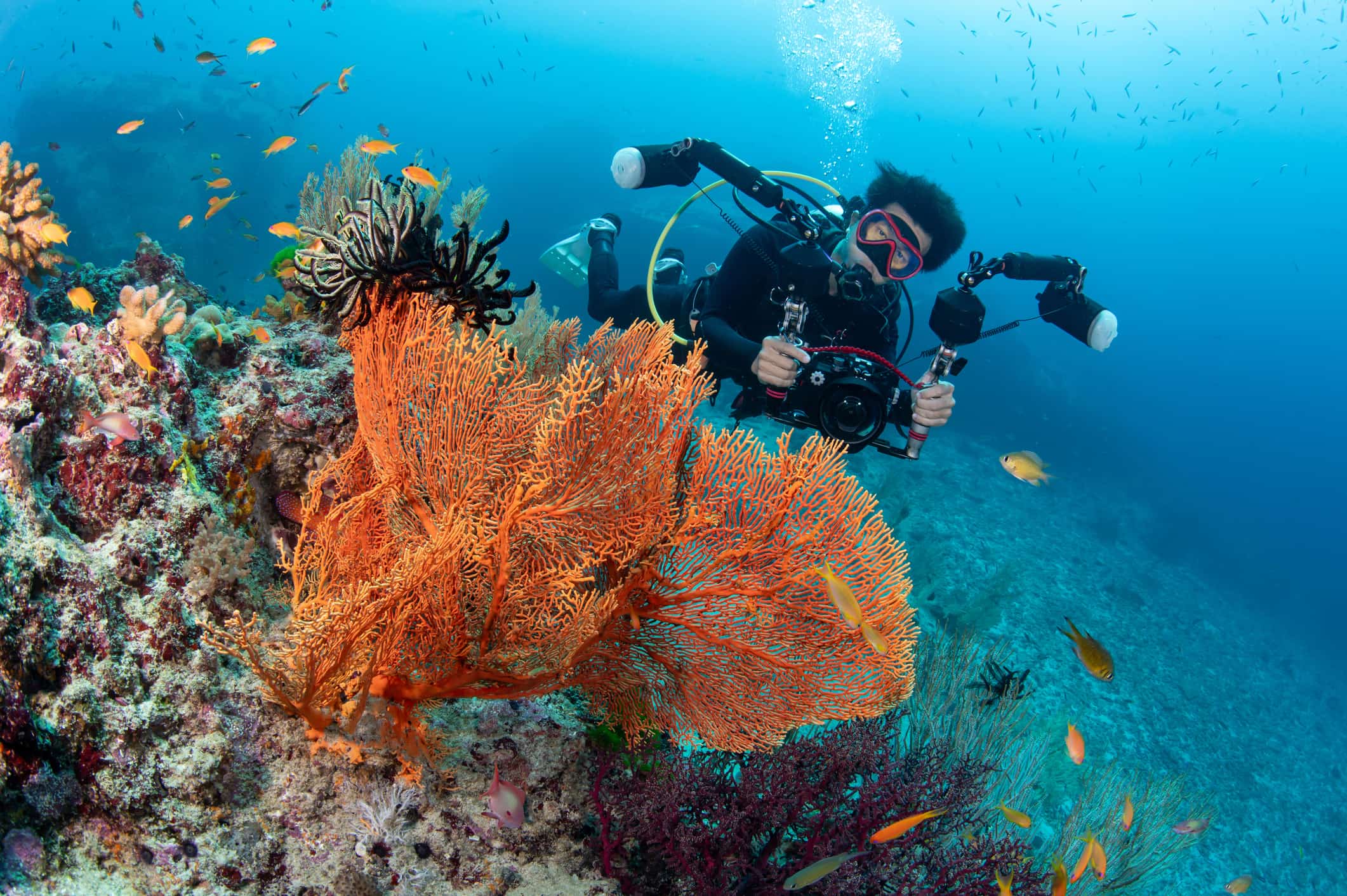
The care of aquatic animals has come a long way from basic tanks and manual water checks. Today, marine biologists, aquarists and conservation specialists rely on a wide range of sophisticated tools to monitor animal health, maintain habitats and support research. From real-time water quality sensors to satellite tracking systems, technology has become central to how professionals understand and protect aquatic life.
Explore the key technologies shaping modern aquatic animal care (and the careers built around them).
Get Your Marine Biology Degree
What Tools Do Marine Biologists Use?
Marine biologists utilize a broad spectrum of instruments and software. The day-to-day toolkit looks very different depending on whether a biologist is conducting fieldwork in the ocean, managing animals in an aquarium or analyzing data in a lab. Here is a snapshot of the most commonly used tools:
- Water quality sensors and multi-parameter probes measure temperature, salinity, dissolved oxygen and pH in real time.
- Acoustic telemetry tags and receivers are used to track the movement and behavior of tagged fish and marine mammals.
- Underwater cameras and remotely operated vehicles (ROVs) allow researchers to observe animals in hard-to-reach environments.
- Veterinary diagnostic tools like ultrasound and blood analyzers help assess animal health without invasive procedures.
- Data management platforms and geographic information system (GIS) software allow biologists to organize, visualize and interpret large datasets.
These tools fall into a few broader categories that are worth exploring in more depth.
Key Types of Technology Used in Aquatic Animal Care
Modern aquatic animal care draws from several distinct types of technology. Each one plays a specific role in maintaining healthy environments, tracking animals and delivering veterinary care.
Water Quality and Life Support Systems
Maintaining the right water conditions is non-negotiable in aquatic animal care. Life support systems now include automated filtration, UV sterilization and ozone treatment that work continuously to keep water chemistry stable. Sensors placed throughout tanks or open-water pens feed data to centralized monitoring dashboards — alerting staff the moment a parameter drifts out of range. These systems reduce the risk of water quality crashes that could harm or kill animals and allow facilities to respond to problems in minutes rather than hours.
Monitoring and Tracking Technology
Knowing where animals are and how they behave is foundational to both care and conservation. Passive integrated transponder (PIT) tags, acoustic tags and satellite transmitters give researchers a detailed picture of movement patterns, feeding behavior and habitat use. In managed care settings, radio-frequency identification (RFID) readers and underwater cameras help staff identify individual animals and track feeding schedules, behavioral changes and social dynamics over time.
Veterinary and Health Technology
Diagnosing illness in aquatic animals presents unique challenges. Animals cannot describe symptoms, and many procedures that work on land require significant adaptation underwater. Portable ultrasound devices, endoscopes and digital radiography allow veterinarians to examine internal structures with minimal stress to the animal. Advanced blood and tissue analysis tools help detect infections, nutritional deficiencies and environmental stress markers early, thereby improving treatment outcomes.
Automation and Smart Systems
Automated feeding systems, programmable lighting and climate control have reduced the manual labor involved in aquatic animal care while boosting consistency. Smart systems can adjust feeding amounts based on water temperature or seasonal cycles as well as alert caregivers when an animal has not eaten. These efficiencies free up staff time for observation, research and hands-on care.
Oceanography Technology and Its Role in Animal Care
Oceanography technology encompasses the instruments and methods used to study the physical, chemical and biological properties of ocean and freshwater environments. This technology directly supports aquatic animal care by giving professionals a deeper understanding of the natural habitats their animals come from or still live in.
Instruments like conductivity-temperature-depth (CTD) profilers, Argo floats and ocean gliders collect continuous data on water column conditions across vast distances. Satellite remote sensing provides wide-area views of sea surface temperatures, chlorophyll concentrations and current patterns. This information helps care teams replicate natural conditions more accurately and gives conservation specialists insight into how changing ocean conditions affect wild populations. As climate change alters marine environments, oceanography technology is becoming more critical than ever for understanding how aquatic species are responding and where intervention may be needed.
Aquaculture Technology: Advancing Sustainable Animal Care
Aquaculture technology refers to the systems and methods used to raise fish, shellfish and other aquatic organisms in controlled environments — both for food production and conservation purposes. As global demand for seafood grows and wild fish stocks face pressure, sustainable aquaculture has become an important field.
Modern aquaculture operations use recirculating aquaculture systems (RAS) that treat and reuse water with minimal waste or discharge. Net pen sensors monitor fish density, feeding behavior and water quality in real time. Selective breeding programs supported by genomic tools are producing hardier, faster-growing species that require fewer inputs.
Beyond commercial production, aquaculture technology supports conservation efforts like captive breeding programs for endangered species, coral restoration and shellfish reef rebuilding projects. Professionals trained in aquaculture technology are equipped to apply these methods across a vast range of settings.
Real-World Examples of Aquatic Innovation
Aquatic innovation is showing up in facilities and research programs around the world. Consider the following examples of how technology is making a measurable difference.
Smart aquariums and digital monitoring systems at major facilities now use centralized dashboards that pull data from dozens of sensors simultaneously. Staff can monitor every tank from a single screen, catch anomalies early and maintain detailed records that support long-term animal welfare assessments.
Artificial intelligence (AI) and data analytics in marine research are helping scientists identify patterns in animal behavior, track population trends and model the impacts of environmental change at scales not previously possible. Machine learning (ML) tools are being used to analyze hours of underwater footage automatically — identifying species, counting individuals and flagging unusual behavior.
Conservation technology is driving meaningful improvements in animal welfare and outcomes in the wild. Satellite-linked tags are providing data that helps establish marine protected areas in locations most critical for feeding and breeding. Genetic databases and non-invasive sampling methods are helping researchers monitor endangered populations without disturbing them. These conservation technology advances are directly translating into better policies and higher survival rates for vulnerable species.
Skills Needed to Work With Aquatic Animal Technology
Working effectively with aquatic animal technology calls for a combination of scientific knowledge, technical ability and practical experience. Professionals in this field typically need:
- Technical and analytical skills – The ability to operate and troubleshoot sensors, monitoring systems and veterinary equipment is vital. Understanding how to interpret data outputs and communicate findings clearly is equally essential.
- Understanding of marine biology and ecosystems – Technology is only as useful as the knowledge base behind it. A solid foundation in marine biology, animal behavior and ecology helps professionals apply tools in context and recognize when something is genuinely wrong versus a normal variation.
- Ability to work with data and emerging tools – As more facilities move toward digital record-keeping and predictive analytics, comfort with data management software and a willingness to learn new platforms is increasingly expected. Familiarity with GIS, telemetry software and aquaculture management systems gives professionals a clear edge.
The Future of Technology in Aquatic Animal Care
The pace of technological development in aquatic animal care shows no sign of slowing. In particular:
- Miniaturized biosensors capable of monitoring an animal's heart rate, cortisol levels and hydration in real time are moving from research labs toward practical field applications.
- Autonomous underwater vehicles are becoming more affordable and capable, expanding the range of environments that can be studied without putting divers at risk.
- Transforming how biodiversity surveys are conducted, advances in environmental DNA (eDNA) analysis now allow researchers to detect the presence of a species in a body of water simply by collecting a water sample.
Conservation technology will continue to play a more integral role as climate change, habitat loss and pollution create new challenges for wild and managed populations alike. Professionals who build skills at the intersection of biology and technology will be well-positioned to lead in this space.
Exploring Careers at the Intersection of Technology and Marine Life
The expansion of technology in aquatic animal care has created a growing demand for professionals who can bridge scientific expertise with technical know-how. Many of these roles now require familiarity with digital monitoring systems, data analysis tools and the kind of hands-on equipment described above. Career paths in this field include:
- Marine biologists
- Aquarists
- Aquaculture specialists
- Conservation technologists
- Marine veterinary technicians
- Environmental scientists
Regardless of whether you are drawn to fieldwork in conservation, life care in an aquarium setting or research using cutting-edge aquatic innovation tools, building a strong educational foundation is the logical first step. Understanding what tools marine biologists use — and gaining the skills to use them — starts with the right training program.
Take the Next Step With Husson University
Aquatic animal care is a field in which science and technology meet in genuinely impactful ways. From the water quality systems keeping animals healthy in managed care settings to the conservation technology protecting wild populations, professionals in this space are doing work that matters.
Husson University's marine biology program prepares students for careers at the cutting edge of aquatic science, and the online undergraduate certificate in aquatic animal care offers focused training in hands-on animal care. If you are ready to build the skills for a career in marine biology and aquatic innovation, explore your options through Husson and request further information today!
Get Your Marine Biology Degree
Back to All Blogs