
Oceanography vs. Marine Biology: What’s the Difference?
Published on: January 22, 2026
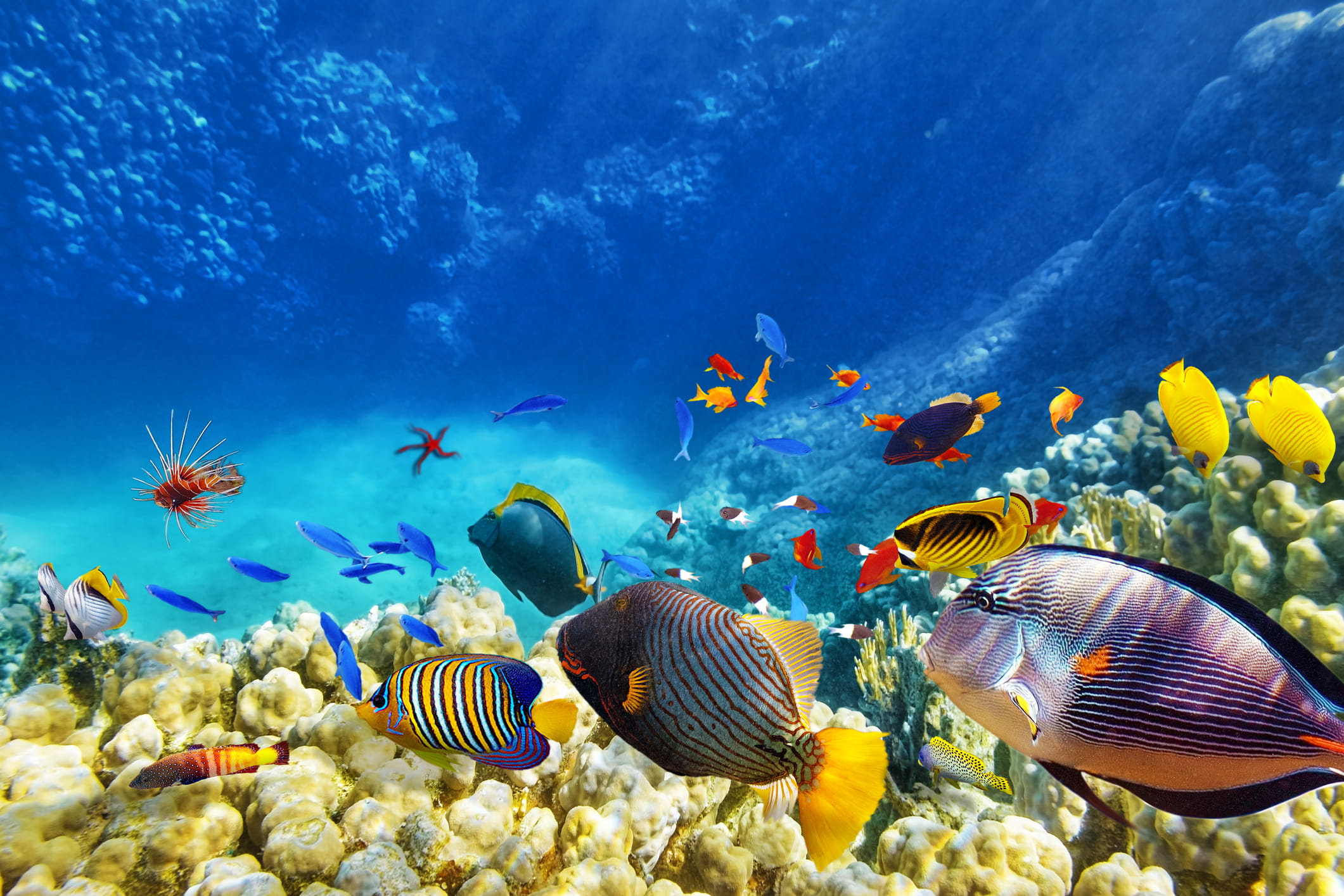
If you’ve ever been drawn to the ocean, from the creatures living in it to the forces shaping it, you have probably come across two fields that seem similar on the surface: marine biology and oceanography. Both put you close to the sea, and both require a serious commitment to science. Yet the difference between oceanography and marine biology goes deeper than many might expect; one centers on life, the other on the ocean itself. Understanding what sets these disciplines apart can make a real difference when you’re deciding which path to pursue.
Get Your Marine Biology Degree
What Is Marine Biology?
So, what is marine biology? Simply put, it is the scientific study of organisms that live in the ocean and other saltwater environments. Marine biologists examine everything from microscopic plankton and bacteria to sharks, dolphins, coral reefs and seagrasses. The focus is on living things: how they grow, reproduce, behave, interact with each other and respond to changes in their environment.
Marine biology sits at the intersection of ecology, zoology, botany and oceanography. It’s a field that rewards curiosity about living systems and hands-on fieldwork. Students of this subject dedicate time to learning:
- How ocean ecosystems function
- How pollution or climate change affects species
- What it takes to protect biodiversity in marine environments
What Is Oceanography?
Meanwhile, oceanography entails the scientific study of the ocean as a physical system. Rather than focusing on the organisms living in the sea, oceanographers examine the ocean’s chemistry, geology, physics and movement. This includes:
- Ocean currents
- Wave patterns
- Tidal forces
- Seafloor structure
- Water temperature
- Salinity
- The role oceans play in global climate systems
Oceanography is a heavily data-driven field with close ties to climate science, environmental policy and large-scale research. It embodies four main branches:
- Physical oceanography (currents and water movement)
- Chemical oceanography (ocean chemistry and carbon cycles)
- Geological oceanography (seafloor features and sediment)
- Biological oceanography (which overlaps slightly with marine biology but emphasizes how ocean conditions influence life rather than studying organisms themselves)
How These Fields Differ in Focus and Coursework
The oceanography vs. marine biology comparison becomes clearer when you look at what students actually study day to day. While there’s some overlap — e.g., both fields require a foundation in science and often involve time at sea — the coursework, skill sets and research priorities are distinct.
Subject Matter and Academic Emphasis
Marine biology programs focus on biology, ecology, taxonomy and conservation. Students study specific species groups, learn to identify organisms and analyze how populations change over time. Courses often cover:
- Marine ecology
- Ichthyology
- Invertebrate zoology and conservation biology
- Fluid dynamics
- Geochemistry
- Atmospheric science
- Climate modeling
Oceanography programs lean toward earth sciences and environmental sciences. The emphasis is less on individual organisms and more on understanding large-scale ocean systems.
Science and Math Expectations
Both fields require strong science preparation, but oceanography generally demands more advanced mathematics and physics. Physical and chemical oceanography especially rely on calculus, statistics and quantitative modeling. Marine biology also requires solid math skills — particularly for population ecology and data analysis — but the emphasis tends to stay closer to biology and chemistry than physics or engineering.
Research and Field Experience
Fieldwork looks a bit different depending on which direction you go. Both careers involve time in the field, but the tools and methods reflect their different goals. Namely:
- Marine biologists often conduct dives, underwater surveys, behavioral observations and lab work involving live or preserved specimens.
- Oceanographers frequently work with sensor arrays, research vessels, satellite data and computational models.
Common Career Paths and Jobs in Oceanography and Marine Biology
Regardless of whether you study marine biology or oceanography, a number of careers become possible after graduating with a degree, especially if you continue into graduate study. Here’s a closer look at what each field opens up:
Marine Biology Careers
Marine biology graduates may go on to work in a range of roles across research, conservation and resource management. A few of the most common include:
- Marine biologists study ocean organisms in the wild or in controlled settings. They may work for higher education institutions, nonprofits or government bodies, conducting research on species behavior, physiology or ecosystem health.
- Fisheries scientists assess fish populations, study sustainability and advise on harvest limits. This work may be done for universities, private firms, environmental nonprofits or in partnership with federal or state agencies such as the National Oceanic and Atmospheric Administration (NOAA).
- Marine conservation specialists work to protect marine ecosystems through policy, habitat restoration and public outreach. They may be employed by nonprofits, the government or international organizations.
Oceanography Careers
Jobs in oceanography tend to involve data collection, analysis and modeling on a large scale.
- Oceanographers investigate ocean systems using instruments, research vessels and remote sensing technology. They may specialize in physical, chemical or geological processes.
- Climate scientists with an oceanography background study how oceans influence global weather and temperature patterns. This work often contributes to climate modeling and environmental policy.
- Marine data analysts process and interpret large datasets from ocean monitoring systems, satellite imagery and research expeditions. Strong quantitative skills are essential.
- Environmental research roles for oceanographers may include those in environmental consulting, federal agencies like NOAA or the Environmental Protection Agency (EPA) or international research organizations that track ocean health and climate change.
Marine Biologist Salary and Oceanographer Salary Expectations
Compensation in both fields depends on education level, employer type and geographic location.
Marine Biologist Salary
The median marine biologist salary in the United States may pay roughly $73,000 per year, according to 2024 employment data for wildlife biologists from the Bureau of Labor Statistics (BLS). The BLS reports that those in government and research and development contexts earn the most, and the highest 10% earned over $113,000 (while the lowest 10% earned less than $49,000).
However, this varies considerably depending on the state and job platform source. Entry-level positions at nonprofits or state agencies might start closer to $45,000, while senior researchers or those in federal roles may earn well over $90,000. Graduate education (particularly a master’s or doctoral degree) can significantly improve earning potential and access to research positions.
Oceanographer Salary
The oceanographer salary range follows a similar pattern, though career resources reflect slightly higher averages for these professionals across the board compared to marine biologists. Mid-career oceanographers typically earn between $70,000 and $95,000, with specialists in physical oceanography or climate science potentially commanding salaries exceeding $100,000.
Working for federal agencies, large research universities or private environmental firms tends to offer higher compensation than positions at smaller nonprofits. Location matters, too, as coastal states and research hubs like California, Florida, Washington and Massachusetts may have more openings and often higher pay.
Choosing the Right Ocean-Focused Major
Deciding between oceanography vs. marine biology ultimately boils down to where your interests and strengths lie. If you’re most excited about animals, ecosystems, conservation and how living things adapt and survive, marine biology is likely the ideal fit. If you’re more drawn to physical systems, data, climate science and understanding the ocean as a force rather than a habitat, oceanography may suit you better.
It’s also worth thinking about your comfort with math and physics. Marine biology does require quantitative skills, but oceanography leans harder into calculus, modeling and physical sciences. If numbers are your strength and you want to work on large-scale environmental problems, that’s a point in oceanography’s favor.
Consider where you want to work, too. Marine biologists are common in conservation organizations, aquariums, wildlife agencies and academic research labs. Oceanographers tend to land in climate research centers, environmental consulting firms, federal agencies and universities with strong earth science programs. Both paths often benefit from graduate education, so your undergraduate major may serve as a starting point rather than a final destination.
Start Your Journey With Husson University
The difference between oceanography and marine biology comes down to your focus: One centers on ocean systems, the other on the life within them. Each field presents opportunities for meaningful careers, competitive salaries and the chance to contribute to our understanding of the sea. What matters most is choosing the path that matches your curiosity and goals.
Husson University offers a marine biology program designed to help students build a strong scientific foundation along with real-world experience. No matter if you’re just starting to explore ocean science or ready to commit to a degree, Husson provides the academic support and preparation you seek. Explore our degree programs and start diving in today.
Get Your Marine Biology DegreeBack to All Blogs