
1. What is the application deadline for the program?
Husson University has rolling admissions for undergraduate studies. Because
the plan of study for the occupational therapy major is very demanding
and the curriculum design is sequential, fall semester start date is strongly
encouraged in order to be on track for successful progression through the
course work. Students applying for the MS-only program have a May 1 deadline
for application.
2. Is there a part-time option for this program? How many years does
it take to complete part-time?
Before the professional phase of occupational therapy course work begins in
the third year there is a part-time option available, and the number of years
for completion depends upon the number of courses taken per semester. Once
students are in the professional phase of occupational therapy courses we discourage
part-time study as it may make successful completion of the national board
exam administered by NBCOT much more difficult. If the student must enroll
part-time during the professional phase the sequence of professional phase
courses is prescribed and must be completed with 5 years.
3. Can you earn a combined baccalaureate degree in Heath Care Studies
and a master's degree in Occupational Therapy?
Yes! A combined bachelor's/master's program is an accredited program that accepts
students without a bachelor's degree. Our program awards a baccalaureate degree
in Health Care Studies and upon completion of the master's-level academic requirements
awards an entry-level master's degree, an MS, in occupational therapy. Successful
completion of the master's degree portion of the program is required for eligibility
to sit for the national certification examination administered by the National
Board for Certification in Occupational Therapy (NBCOT).
4. What is the difference between an entry-level program and a post-professional
program?
An entry-level program is for those students who want to engage in professional
study to become an occupational therapist. Entry-level programs prepare generalist
practitioners who are qualified to work in a range of settings. A post-professional
program is for professionals who are already occupational therapists and who
want to further their education, typically in an identified area of specialization.
6. Can I complete fieldwork abroad?
Yes, but only your Level II fieldwork. There are some countries that have occupational
therapy schools that will assist United States students with fieldwork placement
abroad. Accreditation Council for Occupational Therapy (ACOTE) standards require
supervision by an occupational therapist who has graduated from a program approved
by WFOT, and has at least 1 year of experience in practice. For
further information, click here.
7. Is there anything special about our occupational therapy resources
at Husson University?
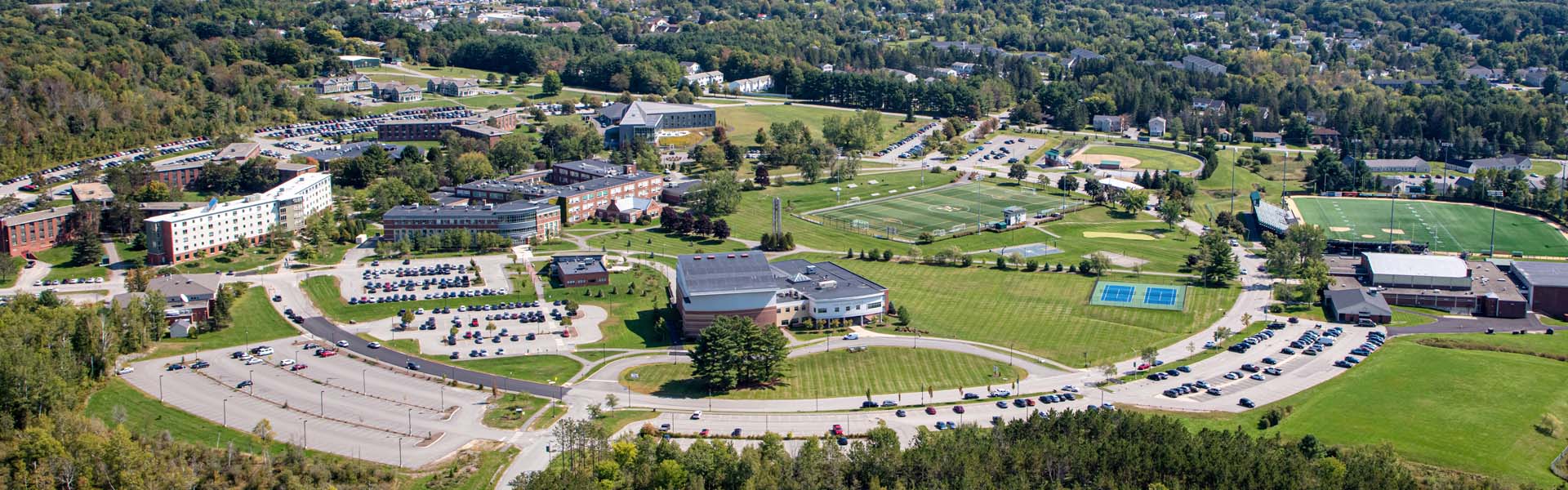
We have a wonderful campus and community-based resources that support learning.
We are part of a College of Health and Education that offers a range of health-related
electives and an opportunity to interact with students from other health disciplines.
The faculty of the School of Occupational Therapy work closely with students
to help each achieve his or her career goal. Towards that goal we have a dedicated
classroom and occupational therapy laboratory that reflects a variety of practice
areas as well as access to a Gross Anatomy Laboratory for cadaver dissection
opportunities. We also have excellent wireless technology throughout the classrooms
and campus.
8. Are there any other costs to the program I should know about?
Yes, there might be other costs that are related to fieldwork experiences in
clinical settings.
These potentially include but are not limited to driving to and from your
fieldwork placements, the costs of immunizations, a background check and fingerprinting
required for fieldwork. You will also be required to pay for CPR training and
possibly housing costs especially for Level II fieldwork.
9. Is the Program Accredited?
The Occupational Therapy Program at Husson University was accredited in 2003
by the Accreditation Council for Occupational Therapy Education (ACOTE) ACOTE c/o Accreditation Department American Occupational Therapy Association (AOTA) 4720 Montgomery Lane, Suite 200 Bethesda, MD 20814-3449
10. How do I become certified?
Once you graduate, you will become eligible to take the National Board for
Certification in Occupational Therapy (NBCOT) examination. Their address is:
800 S. Frederick Ave., Suite 200, Gaithersburg, MD 20877-4150 (301) 990 7979. Click
here to visit the NBCOT website http://www/nbcot.org. After successful
completion of this exam, you will be an Occupational Therapist Registered (OTR).
Most states require licensure in order to practice as a therapist, however,
state licenses are usually based on the results of the NBCOT examination. Please
be aware that a history of a felony conviction may affect a graduate's ability
to sit for the NBCOT examination or attain state licensure.